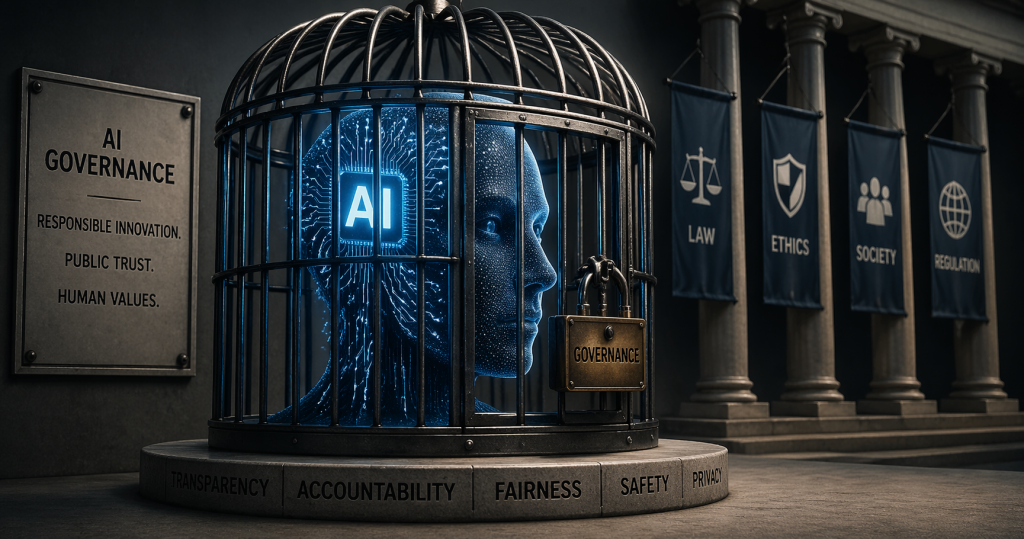
AI Is No More of a Threat to Your Organization Than Your Most Negligent User
Artificial intelligence isn’t the existential threat some headlines make it out to be. In reality, AI is no more dangerous to your organization than the least careful person who already has access to your systems. The real risk isn’t the technology itself—it’s how it’s used, governed, and monitored.
When AI is deployed without guardrails, it can amplify mistakes, expose sensitive data, or automate poor decisions at scale. But when organizations establish clear governance, oversight, and usage rules, AI becomes a force multiplier for productivity, security, and operational excellence. The difference between risk and reward comes down to structure.
Every organization already manages human risk: accidental data leaks, misconfigurations, shadow IT, and well‑intentioned but risky shortcuts. AI simply introduces a new interface for those same behaviors.
With proper governance, AI becomes:
Predictable — because usage is defined and monitored
Secure — because data access and model behavior are controlled
Compliant — because policies align with regulatory requirements
Empowering — because employees know what they can do, not just what they can’t
AI doesn’t create new categories of risk; it magnifies existing ones. That’s why governance is the real differentiator.
Establish Clear AI Acceptable Use Policies
This includes:
Approved AI platforms
Prohibited data types (e.g., PII, financials, regulated data)
Required review processes for AI‑generated content
Policies should be written in plain language and reinforced through training.
Implement Role-Based Access and Data Controls
Limit access based on:
- Job function
- Data sensitivity
- Operational risk
This ensures AI tools only interact with data appropriate for each user.
Require Human Oversight for Critical Outputs
Put guardrails around:
- Automated actions
- High‑impact recommendations
- Customer‑facing content
- Security‑related outputs
Human‑in‑the‑loop review prevents small errors from becoming large ones.
Monitor AI Usage and Log Interactions
Track:
What data is being used
Which prompts are being submitted
How outputs are being applied
Monitoring helps detect misuse early and supports compliance audits.
Provide Ongoing Training and Scenario‑Based Guidance
Offer:
- Real‑world examples of safe vs. unsafe usage
- Department‑specific guidance
- Regular refreshers as tools evolve
Training transforms AI from a risk into a strategic asset.
